

Our Support
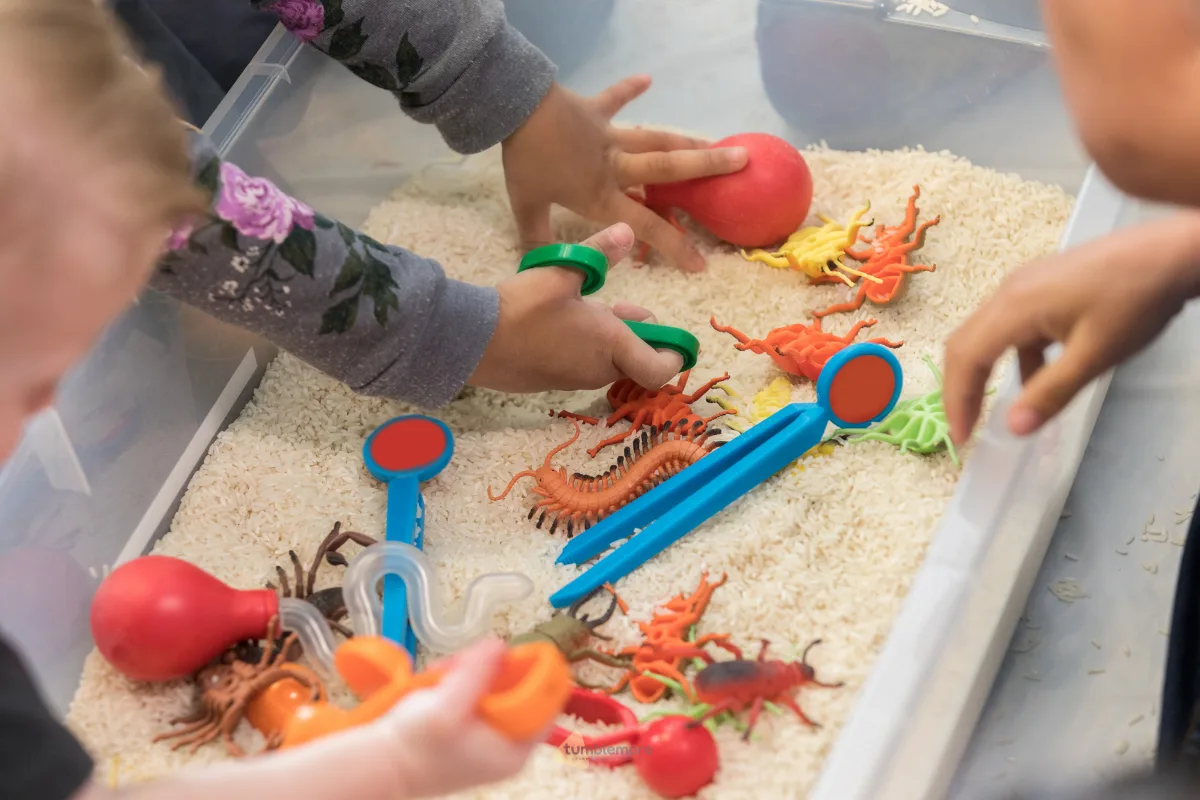
The activity table is full of colours and materials, but your child pulls their hand away when invited to touch something. Other children are busy playing while yours prefers to stand nearby and watch.
It can be tempting to encourage them more firmly. Yet a play session does not need to end with your child touching every material. Getting to know something unfamiliar can begin with simply looking.
Start with what interests them
Notice whether your child is drawn to a colour, container, or tool. They might not want to touch a material directly but may be interested in holding a spoon or moving a bowl.
Where it suits the activity and the instructor’s guidance, these tools can offer another way to participate. Your child can explore without putting their hands directly into the material.
Offer a choice, then give them space
A simple question such as “Would you like to try the spoon?” gives your child an option. If they say no, there is no need to repeat the invitation over and over.
Avoid taking their hand and placing it into a material without their agreement. Instead, play nearby and describe what you are doing: “I’m pouring this into the bowl.” Then allow time for them to watch.
There is no single result to aim for
Children may enjoy different parts of sensory play. One might spend the session pouring, another may move the tools around, and someone else may only decide to join towards the end.
Other children do not need to become the benchmark. Pay attention to your own child’s response: do they seem curious, comfortable, or ready to stop?
Speak with the instructor
Mention any materials your child finds uncomfortable or previous experiences that may be useful to know. Ask whether there is another way to join the activity.
At Tumblemore’s Sensory Class, take the opportunity to notice how your child likes to play. A photograph of colourful hands is not the measure of a successful session. A child who enjoyed the experience, even while trying only a little, still has something to take away from the day.

